A Guide to AI x Street Photography
This photo work centered around the theme of street photography, this project presents a concise series of street scenes. I utilized AI tools throughout the creative process—experimenting with their ability to assist, enhance, and even reinterpret the act of photographic observation.
1. Photo to Text to Photo
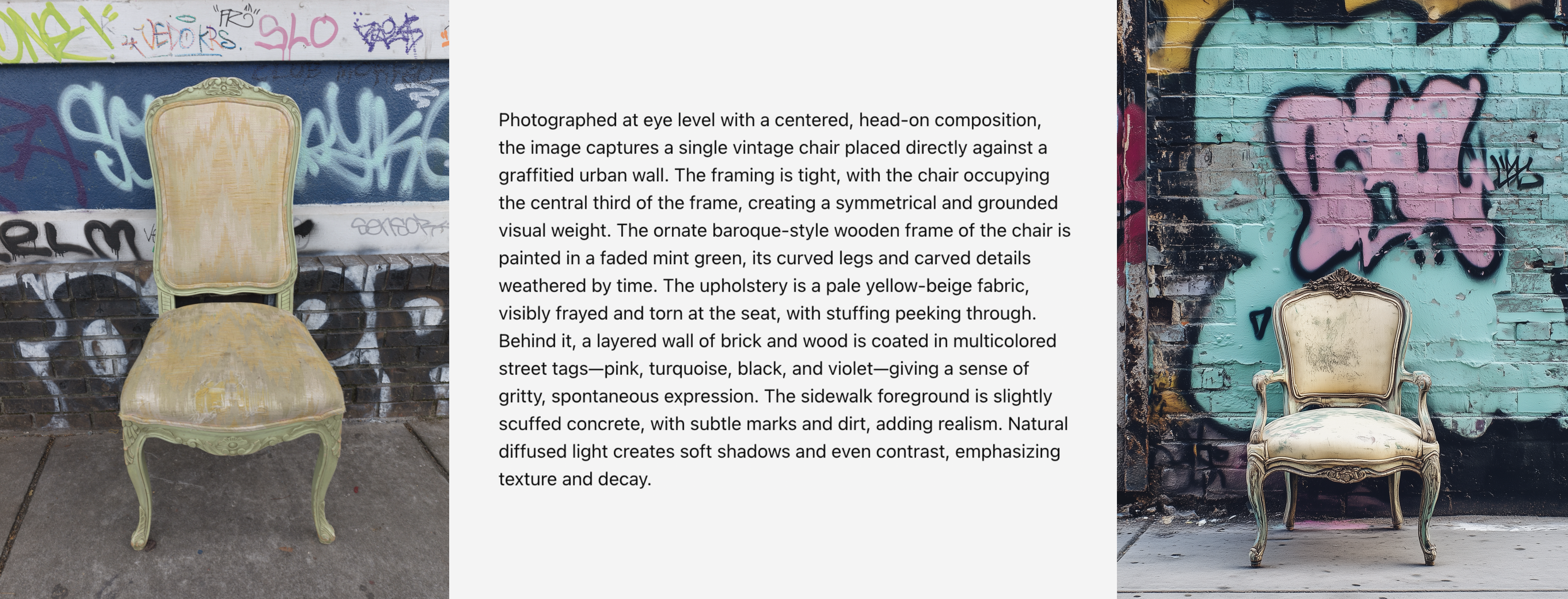
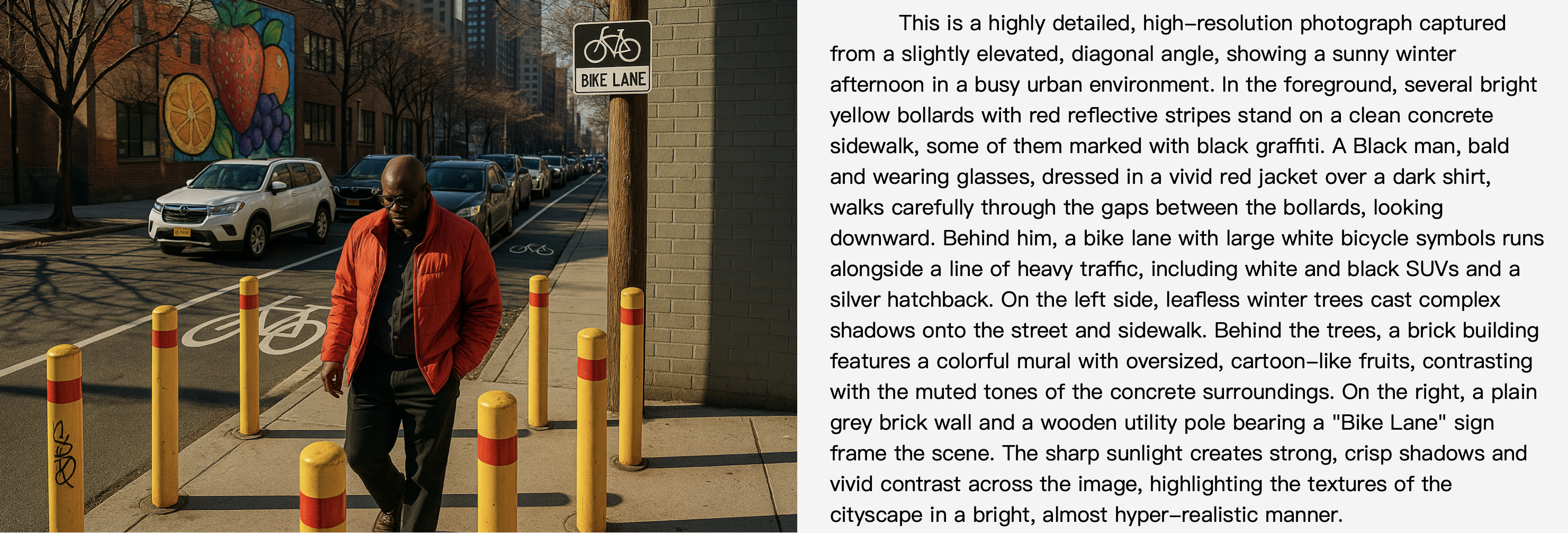
A photograph taken by a camera is first given to an AI to generate a textual description, and then this description is fed into an image-generation AI to produce a new picture. This process shows that AI can grasp the main elements of the scene and relatively accurately translate them into text, eventually generating an image with the same basic components.
However, it is clear that the AI struggles to capture finer details and is prone to errors when dealing with objects whose forms are vague or difficult to distinguish.
2. Photo to Text to Photo (Abstraction)
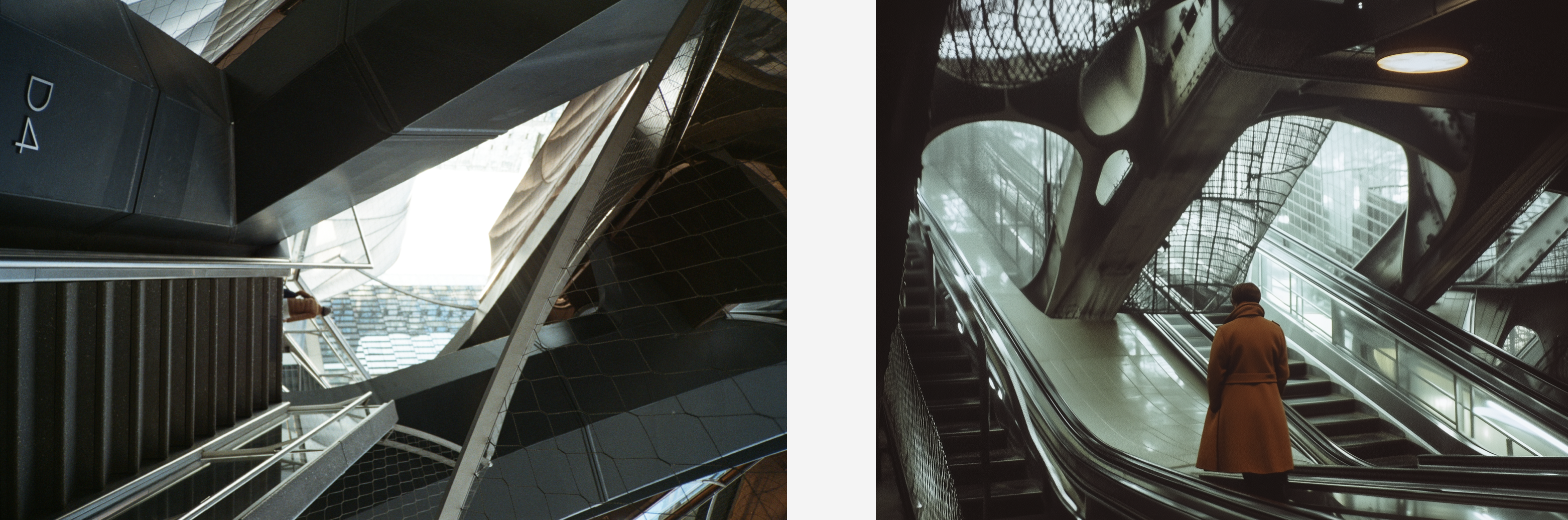
When confronted with highly abstract or difficult-to-discern photographs, the AI’s analytical abilities become notably limited. The image it generates can only rely on a few abstract keywords to establish a general tone, but the final result often differs significantly from the original photo.
Due to the vagueness and limited information, the AI often amplifies certain features mentioned in the description, resulting in generated images with an exaggerated style.
3. AI Nude / Deepfake
Since its invention, AI image manipulation technology has been widely used to create pornographic content—a pattern that mirrors the early histories of photography and film. Using AI to "undress" a person is remarkably easy.
Ironically, because AI training is deeply influenced by mainstream Western values, the resulting images often depict idealized body shapes and exaggerated sexual characteristics.
4. Decline of Text
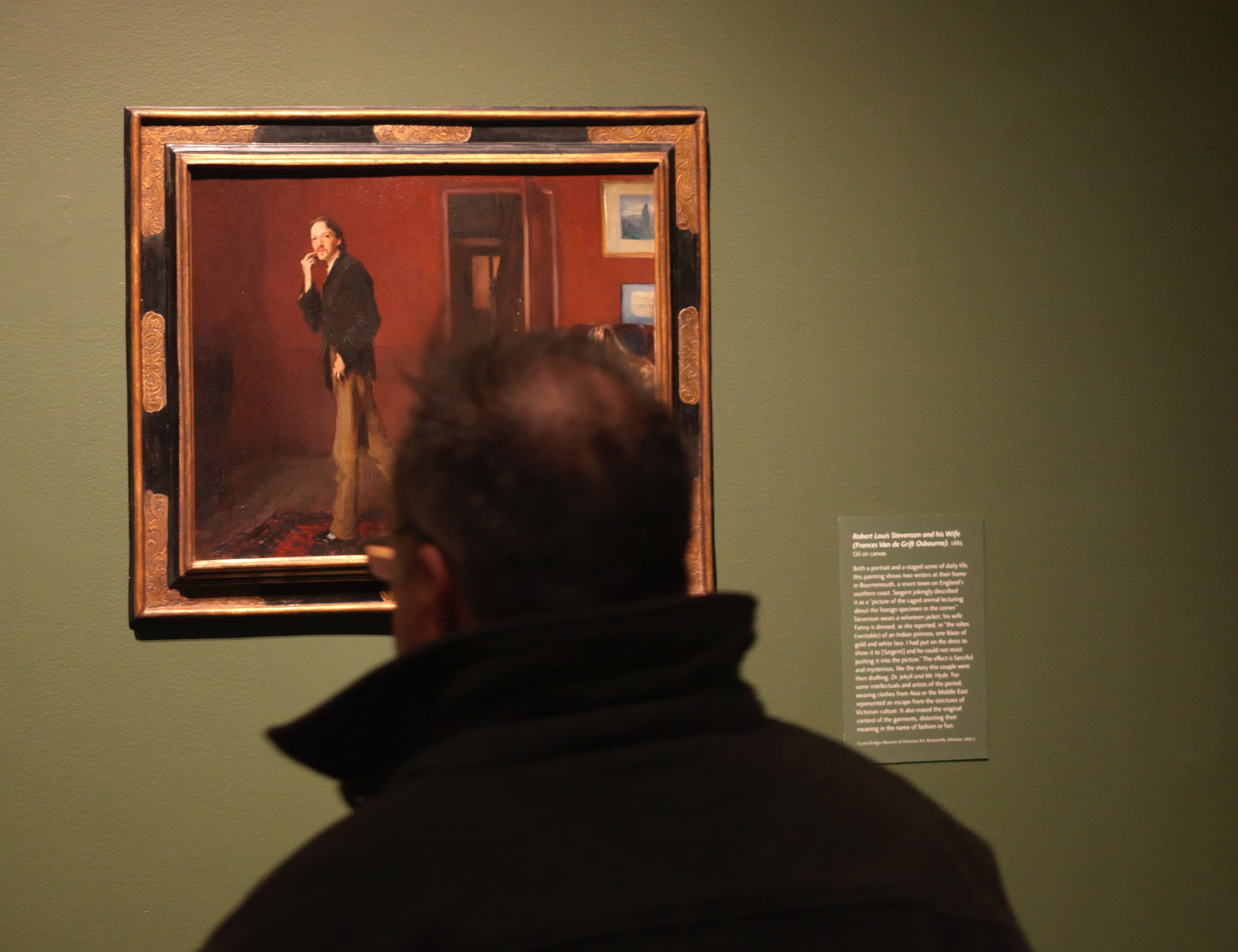
As the amount of descriptive text decreases, the AI receives less information when generating an image. The image gradually becomes more distorted with the reduction of text: elements disappear, and the composition becomes simpler and flatter. Even the people depicted within grow increasingly different from those in the original picture.
This phenomenon may reveal the large language model’s heavy reliance on language, where language serves as an absolute variable in the process of image generation.
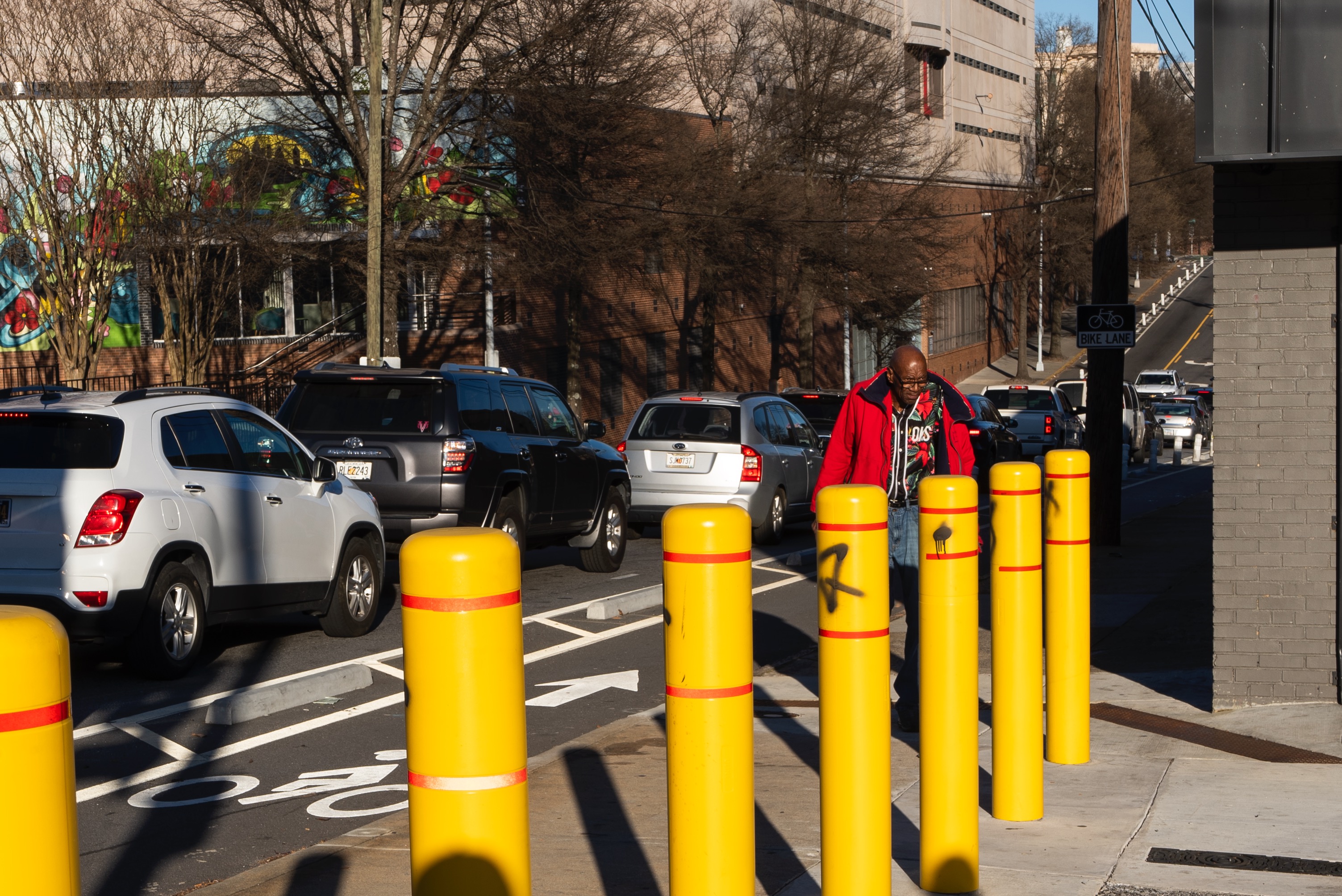
Original Photo
5. AI Extension
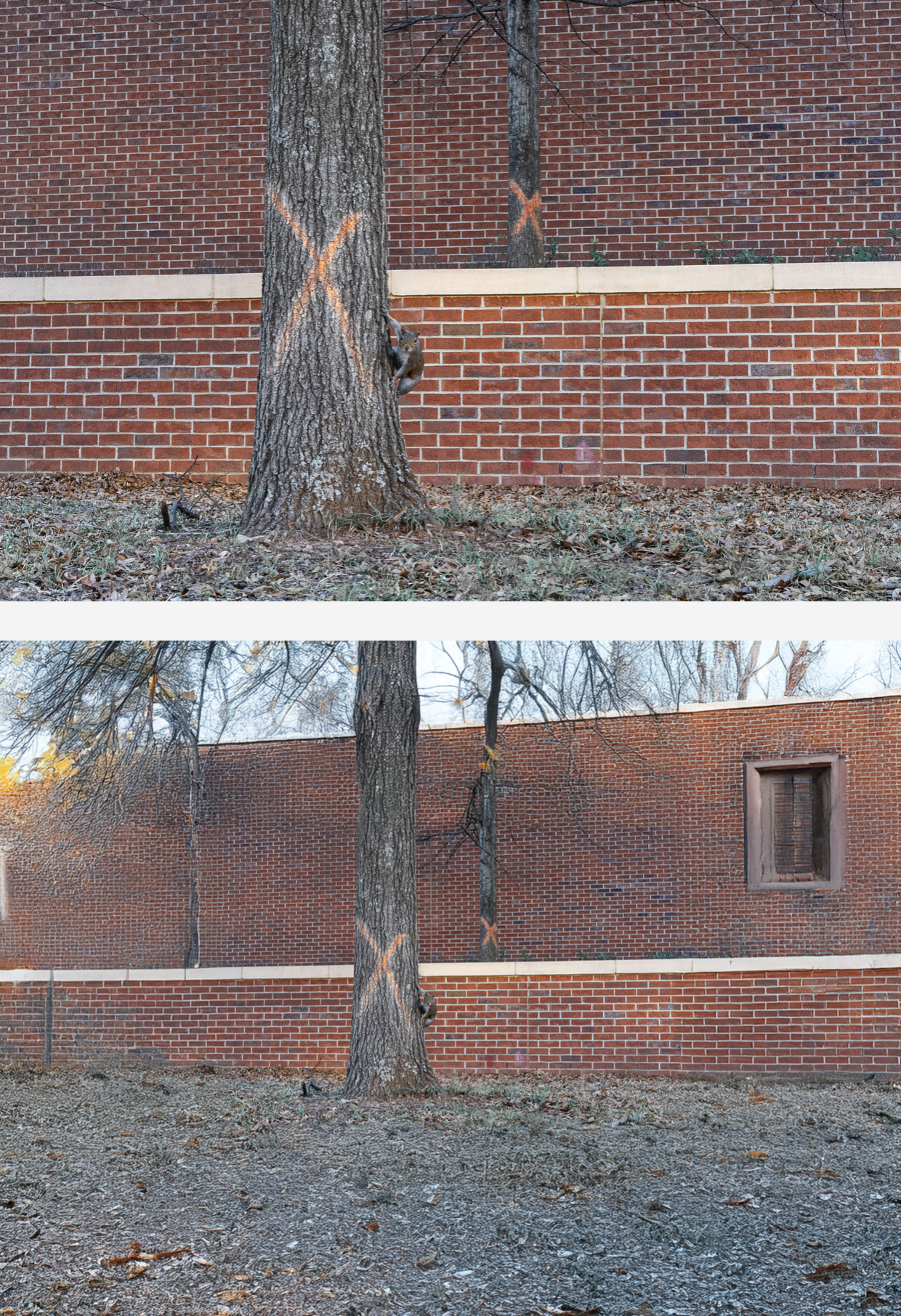
By using Adobe Photoshop’s built-in AI image generation feature, we can extend the edges of our photographs and add additional elements. Even upon close inspection, traces of AI generation often remain visible.
However, if the original image features highly regular and repetitive patterns—such as bricks, railings, or leaves—the AI finds it easier to extend them logically, making the generated portions much harder to distinguish from the original.
6. AI Coloring
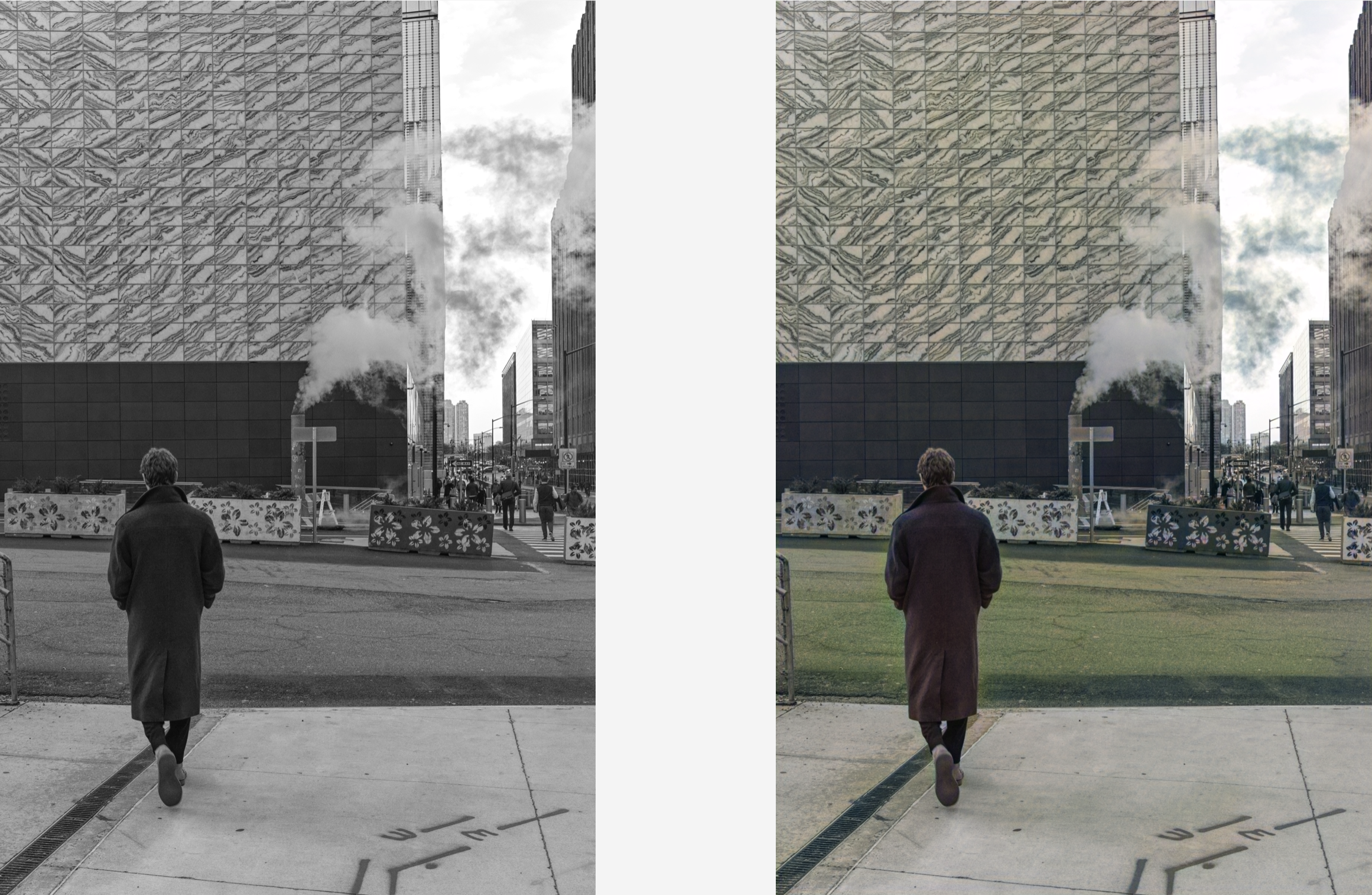
When coloring black-and-white photographs, AI mainly relies on differences in grayscale and the recognition of specific objects—for example, identifying trees and grass as green. Generally, the colors produced by AI have relatively low saturation and tend to be conservative, avoiding overly drastic changes. However, in certain situations, the coloring process can fail. For instance, in the example below, smoke is mistakenly tinted blue-green due to the strong contrast with the bright sky.
AI also struggles to recognize details in blurry photos As a result, it often defaults to applying a uniform brown tone, giving the appearance of coloring without actually enhancing the image meaningfully.
Concrete Photo
7. Change in Texture
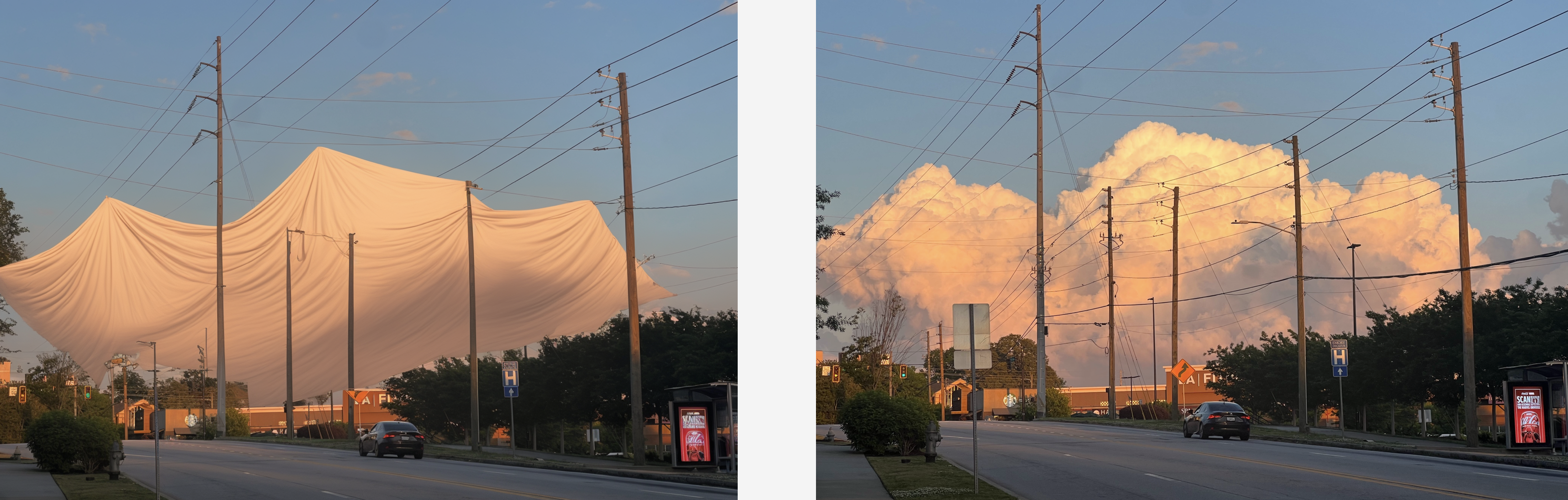
Christo and Jeanne-Claude’s works are remarkable. By using AI, I can apply this idea of texture-based wrapping to almost anything—a human figure, a giant Buddha, or even a massive cloud.
There are so many more possibilities for manipulating objects within photographs, creating a wide range of effects. I often feel that my identity as a photographer and filmmaker acts as an anchor in my mind—whenever I encounter a thought about art-making, the final form almost always manifests itself as a photograph or a film, even if the idea could also take the shape of an exhibitable sculpture or a piece of performance art. With AI, many of these transformations can now be achieved with just a few clicks.