As photography has become an exceedingly ordinary, mass activity, people have grown accustomed to it on the one hand, while on the other becoming increasingly sensitive to street photography—an act that is, by its very nature, somewhat invasive.
Perhaps it is precisely this normalization that has turned photographing strangers into an aberrant social behavior. Perhaps it stems from a heightened awareness of personal information and individual rights. Or perhaps it is because, with the ubiquity of smartphones, photography has become effortless, and photographers carrying cameras no longer possess the tacit privilege they once did during the heyday of street photography. As a result, what remains in the public eye is often irritation and resistance toward photographers.
Street photographers therefore frequently encounter hostility, and this inevitably affects the act of creation. Those who notice the camera may respond with cold stares, cover their faces, or angrily point at the lens. All of this makes it difficult for street photography to unfold freely and without constraint. This is also why many so-called “street photographers” today prefer to photograph shadows, symmetrical city streets, road signs, and lamps, using medium telephoto lenses like 85 mm instead of 28 mm or 35 mm.
Wide angles are like daggers—an inch shorter, an inch more dangerous—while telephoto lenses exist to “snipe” image after image without the subject’s awareness. But photography is not a battlefield; it is not a matter of life and death. Photography is about capturing light, about allowing the photographer to see how the world appears through a lens. I would rather face blades flashing than engage in beyond-visual-range strikes. The former is challenging; the shallow depth and dense visual information are thrilling. The latter only reinforces the voyeuristic nature of contemporary street photography, feeding the photographer’s guilty pleasure after a successful sneak shot, while giving critics even more reason to condemn the practice.
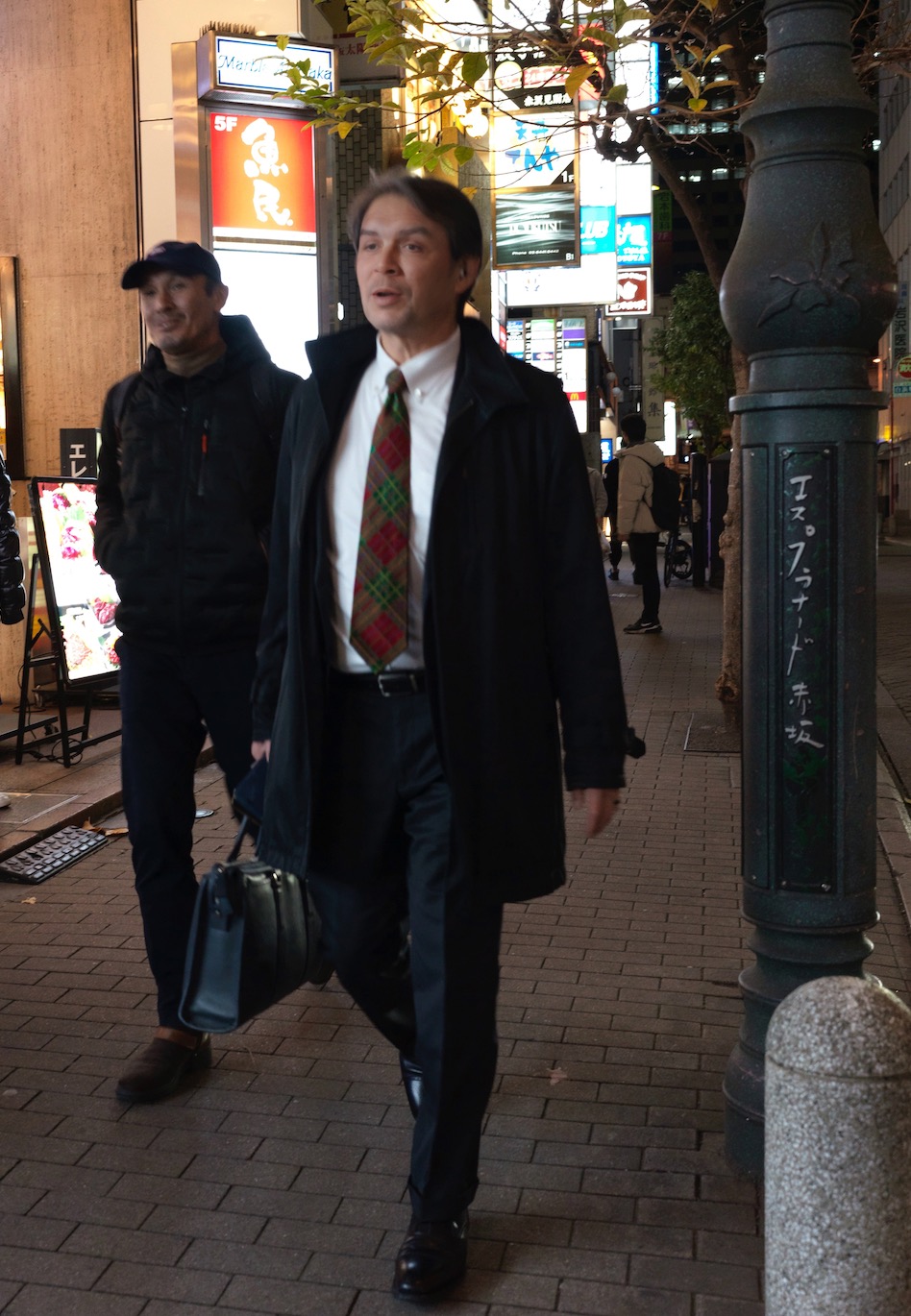
Last December in Tokyo, I inserted a blank SD card into my camera and made a large number of photographs of people on the street. I then processed them using AI face-replacement technology, deleted the original images, and color-graded and cropped the results—achieving the effect that I had photographed no one at all.
Indeed, a person’s posture can still be recognizable, but for most people the face carries the majority of individual specificity. So when the figures in my photographs are people who do not exist in the world, do the images lose their infringement on personal rights? Does my sharp photographic gesture become softened?
Yet if AI has this capacity, it is also a double-edged sword. If I photograph a crowd and then use AI to strip them naked, presenting a scene of collective public nudity, am I engaging in fictional artistic creation—or am I maliciously reconstructing reality? I believe it is both. It is intention that determines the nature of an act, and artistic behavior has never been inherently incompatible with intrusion or harm to others… has it?
In reality, most smartphone camera systems and modern digital cameras already contain built-in AI assistance—used for sharpening, beautification, or noise reduction. At the same time, embedding technologies like “automatic face replacement” into these devices is by no means difficult. When future cameras all come equipped with such tools—capable of profoundly distorting reality—how are we to judge the truthfulness of images? And if these technologies are used with malicious intent, then as technology advances, they will become increasingly difficult to guard against.