Every June, when the weather turns hot—when even the air conditioner can no longer disperse the stifling heat trapped in the bedroom—I become insomniac. Often, relentlessly so. I lie down at midnight; on a good night I might fall asleep around three or four. On a bad night, once the blue curtains begin to pale and the cabinets in the room sharpen into view, I know that sleep will not come at all.
Those sleepless hours are colorless, yet on reflection they are far from empty. On the contrary, with the mind remaining fully awake, the darkness takes on a strange liveliness. I think about how many things I have to do the next day—and how, because of insomnia, the entire morning must be surrendered to sleep. I think about the many books I want to read over the summer, the many films I want to watch, and how I still hope to carve out time for basketball and Overwatch. Then I begin to question the meaning of sleep itself: if I already have so many waking hours that need to be rationed with care, why must I give up a third of my life—or more—just to exile my consciousness into the void? I soon argue with myself, because sleep is not a void; there are dreams. After insomnia always come fractured dreams and days from which one never fully wakes.
At that point my brain turns philosophical, pondering the universe, life, and everything—and then, finally, it wants to sleep.
Perhaps I truly lack the aptitude required for enlightenment. Or perhaps the meaning of the universe really is forty-two.
At the beginning of June I returned to my hometown. The moment I stepped into my room, I caught sight of three mouse droppings on the floor. I tore the room apart from beginning to end: my playing cards and my saxophone certification papers had been gnawed into paper confetti; the drawer contained an unforgettable composition rendered entirely in excrement.
For the first time in my life, I felt such intense anger—and murderous intent—toward an animal.
I still remember a summer night three years ago, in this very room. I caught a mouse and released it on the other side of the river. Before letting it go, I spoke to it earnestly, telling it not to come back to my house, because my grandmother would submerge it—cage and all—into water. The elders at home always said that mice can understand human speech, so one must not say things like “kill the mouse” or “why won’t it come out.”
At the time, I truly believed that mouse could understand me.
Now it seems the three-year term has expired, and they learned nothing.
I paced around the room holding a knife (literally). The traces the mouse left behind were still fresh, so I guessed it was still inside. I lifted the mattress, moved the bedside table, opened each cabinet in turn—until I found its corpse behind the thick cushions of the sofa.
As the stench of decay rushed toward me, my murderous intent evaporated instantly. For the first time, I understood the phrase “sword drawn, one looks around in vain.” It was exactly like those scenes in wuxia novels: mastering supreme skills, descending the mountain, only to find that one’s mortal enemy has already died. Setting aside the smell of death, its posture was almost peaceful. Though its frenzied behavior before dying had made its end seem long and torturous—probably the result of rat poison.
By the time I moved the sofa away, it was already past midnight. After cleaning up, I lay down on the bed. Lying down was no longer primarily for sleeping, but for being insomniac. I thought about how the first mammal death had appeared in my room, and I felt grateful that it was not me. Then I thought of death; from death to immortality; from immortality to creation; from creation to the realization that my photography is still terrible, unlikely to serve as a vessel for my immortality—at which point my head began to ache, forcing me to scroll on my phone while lying on my side to ease the pain. Halfway through scrolling, I worried that using my phone in the dark would damage my eyes, so I turned the desk lamp back on—making sleep even more impossible.
By three in the morning, both my phone and I were tired from our struggle. I tossed it beside the pillow and tried once more to fall asleep.
Then I thought of a story:
“Once, Zhu Yuanzhang went up the mountain to gather firewood, carrying a shoulder pole. Halfway up the mountain he grew so tired that he rested his head on the pole, stretched out his arms, spread his legs, and fell fast asleep on the road, face up to the sky. Just then Liu Bowen happened to pass by while visiting a friend. Seeing Zhu Yuanzhang’s sleeping posture, he was startled and muttered to himself, ‘Isn’t that the character tian?’ He kicked him with his foot, but Zhu did not wake. Instead, he rolled over, laid the pole across his waist, drew his legs together, and continued sleeping. Liu Bowen looked again and was even more astonished: ‘Isn’t that the character zi? Put together, don’t they form tianzi—the Son of Heaven?’ Seeing that this was no ordinary man, bearing the appearance of an emperor, he woke him and knelt, proclaiming, ‘Long live my lord! Ten thousand years!’ Zhu Yuanzhang was confused and asked why. Liu Bowen replied, ‘Just now, my lord’s sleeping posture revealed the Son of Heaven. I have sought you for many years without success. Last night I observed the stars and saw that today the Son of Heaven would arrive at this mountain. Our meeting today is the will of Heaven.’”
I thought: lying on my bed with my limbs spread out, my phone tossed by the pillow—haven’t I formed a giant character for “dog”?
And then I fell asleep.
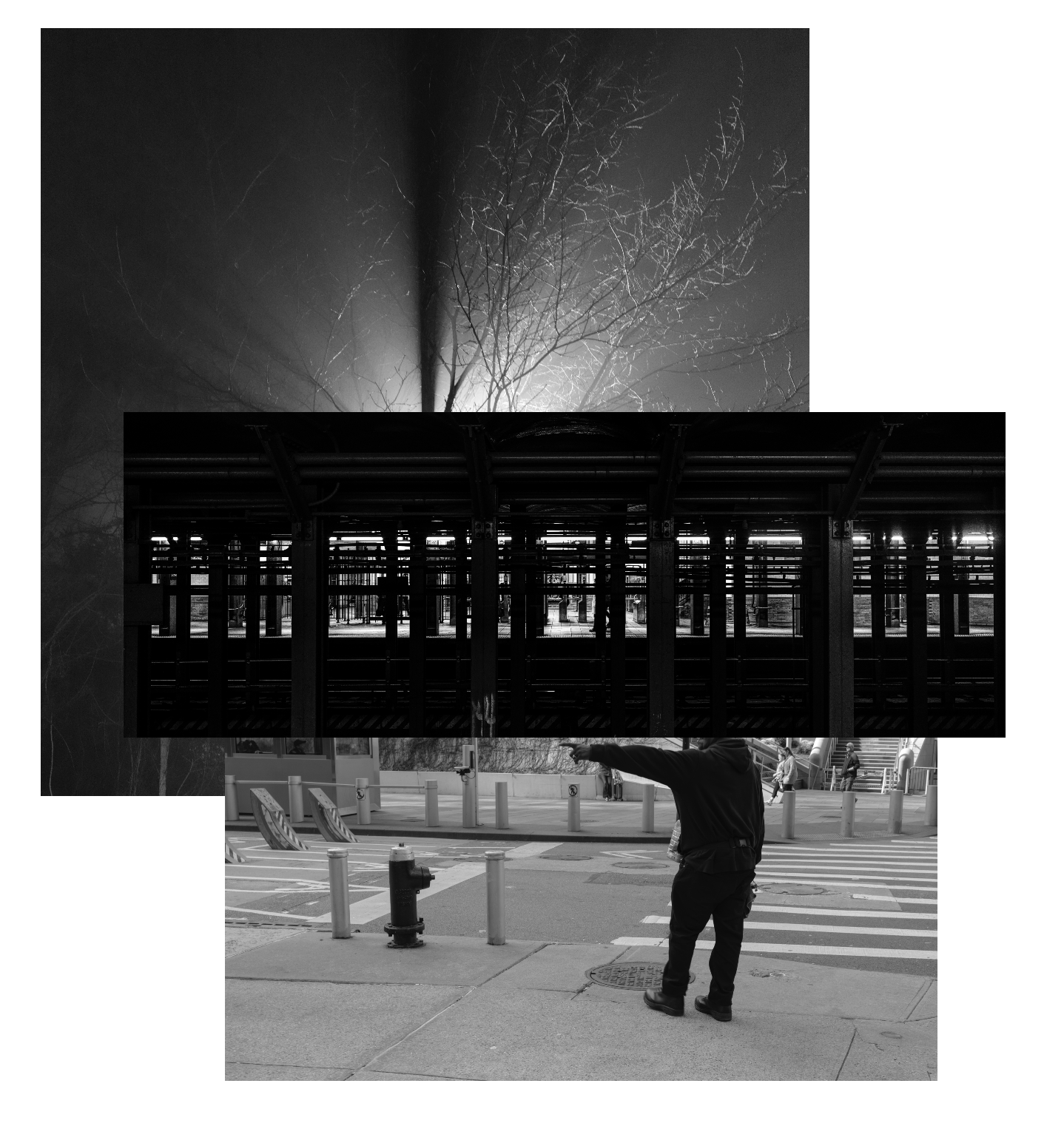
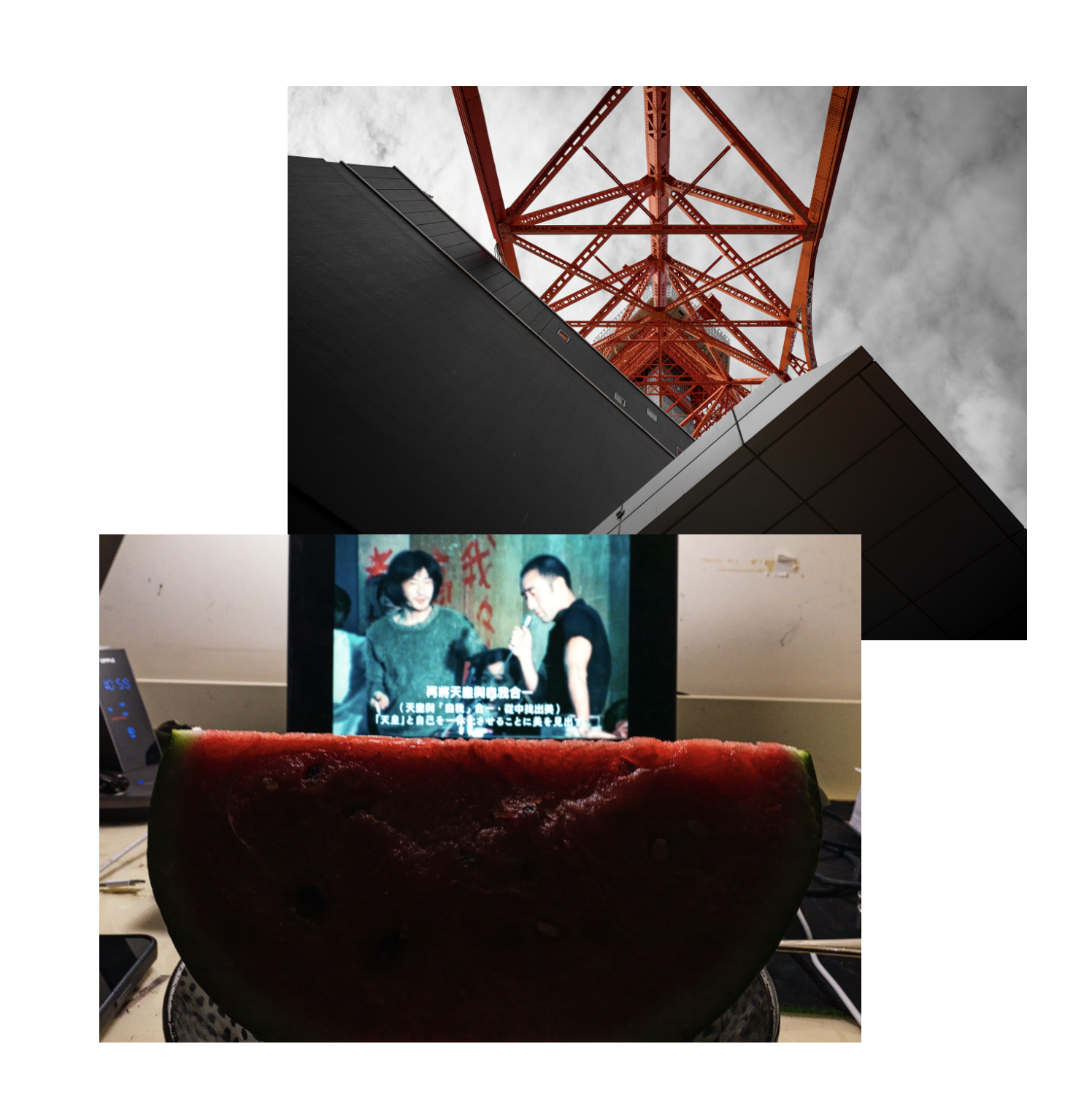
In my dreams there was nothing but the fog of Atlanta, the subways of New York and the homeless, Mount Fuji and road signs, the sun and Mishima Yukio’s emperor, museums and skies that were too blue, air and faith, watermelon and freedom, skin and electrical signals, myself turning into a dog, and so on.