I spent ten days in Poland. I didn’t take many photographs, and when I later sorted through them, most were a mess. Kraków’s old town is undeniably beautiful; Warsaw is full of buildings left behind by the Soviets. Yet every time I half-pressed the shutter, something felt missing. I sensed the images would turn out dull, so eventually I stopped carrying the camera altogether. Now, sliding the card into the reader, I find that among all the photographs taken in Poland, only Auschwitz has stayed with me.
To describe a tourist site as “heavily guarded” feels counterintuitive. Of course, in the case of a concentration camp, calling it a “historical site” may be more accurate. From the parking lot to the ticket office, identification is required to purchase a ticket; every guard in sight is armed. After paying, the clerk slides the ticket and a sticker through a small opening beneath thick glass and instructs you to place the sticker on your chest.
Before entering the camp, there is a security check. Then you wait at an electronic gate for your assigned time slot. Entry follows a strict schedule; only after the time printed on the sticker on your chest is checked can you pass through. A guide leads us in, warning us not to use our phone cameras freely, not to talk loudly or laugh. Layers of prohibition symbols overlap everywhere—more than in an airport or a government building. Old barbed wire intertwines with new, creating an absurd sensation of crossing history itself.
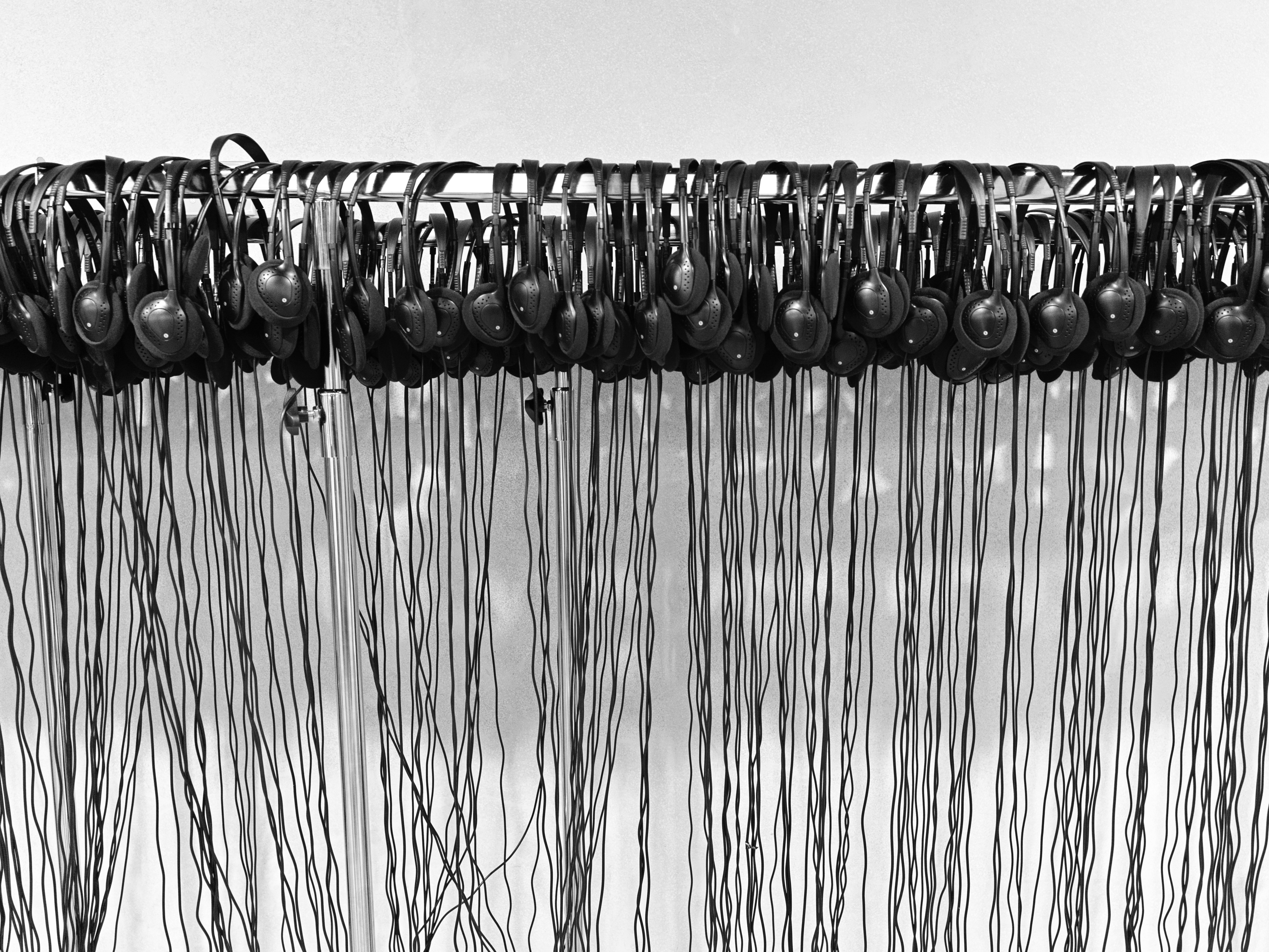
We line up to take our headphones. Hundreds of cords hang down, and they remind me of the sky in Death Stranding—and yes, when it comes to death, there may be no place that represents it more fully than this.
Auschwitz has no tombstones. After all, who would want to be buried in a place of such sorrow? Even so, everything here resembles a tombstone: orderly, gray, mute. Even the square benches are as cold as slabs of gray marble.
The windows beside the execution wall are boarded up so that those inside could not see the killing outside. Everything here resembles a modern slaughterhouse—except that today we pursue meat, while the Nazis pursued only the death of Jews. The former is driven by animal instinct; the latter by ideology. In that sense, humans are far more terrifying than any other animal.
The gas chambers and crematoria stand at the end of this assembly line of death. Back then, the local residents did not know of the mass killings inside the camp; they only saw black smoke rising day after day.
I don’t know whether Judaism has notions of oppressive yin energy, or of reincarnation, or of heaven and hell. I only know that I felt deeply unwell there, and I left quickly.
At the entrance, the utility pole is covered with layers of paper. Up close, I realize they are the stickers visitors had worn on their chests, pasted one over another until the pole has grown thicker. I peel the sticker from my own coat and add it to the pile.
Countless eyes look out in every direction. I don’t know whether they can see clearly.
This should never have happened—and it should never happen again. Right?