If it weren’t for the fact that there was a fireworks festival as early as May, Isehara would probably be a place I’d never visit in my life. The ticketing website and the venue itself were, unusually, Japanese-only. I guessed this would be a rather “rural,” highly localized gathering, and with my Japanese hovering around a solid C, I expected to run into plenty of communication trouble.
It took more than an hour by train from Tokyo. In a place where Uber doesn’t operate, I managed—after some effort—to get a taxi. When the driver heard us speaking Chinese in the back seat, she immediately knew why we were here.
“はなび? (Fireworks?)” she asked directly. We nodded quickly. Smiling, she drove us into the night. As darkness fell, the car slipped into mountains without streetlights, and my phone signal gradually disappeared. My suspicions aligned ever more closely with reality: this really was rural, and there were certainly no tourists. Still, apart from my phone battery running low, none of this made me particularly anxious.
In fact, in a country as tourism-driven as Japan, it’s difficult to stumble upon a city with no English on its advertisements or signs unless you actively seek one out. Wandering through such an unfamiliar environment, though it gave me a faint sense of helplessness, made me feel more like a traveler than a consumer—someone not here merely for spending and pleasure.
As the sky darkened, the unfamiliar surroundings wrapped around me like the spreading night itself. There was a trace of unease, but more excitement and curiosity. If it weren’t unfamiliar, I wouldn’t be a traveler; if there were no night, fireworks wouldn’t be brilliant.
When we finally reached the festival grounds, thousands of people were already seated in neat, rectangular rows. The scene was grand yet orderly, like a shaggy carpet pilling up in the dark, while the shops glowing with yellow light along the edge looked as though the carpet itself had caught fire.
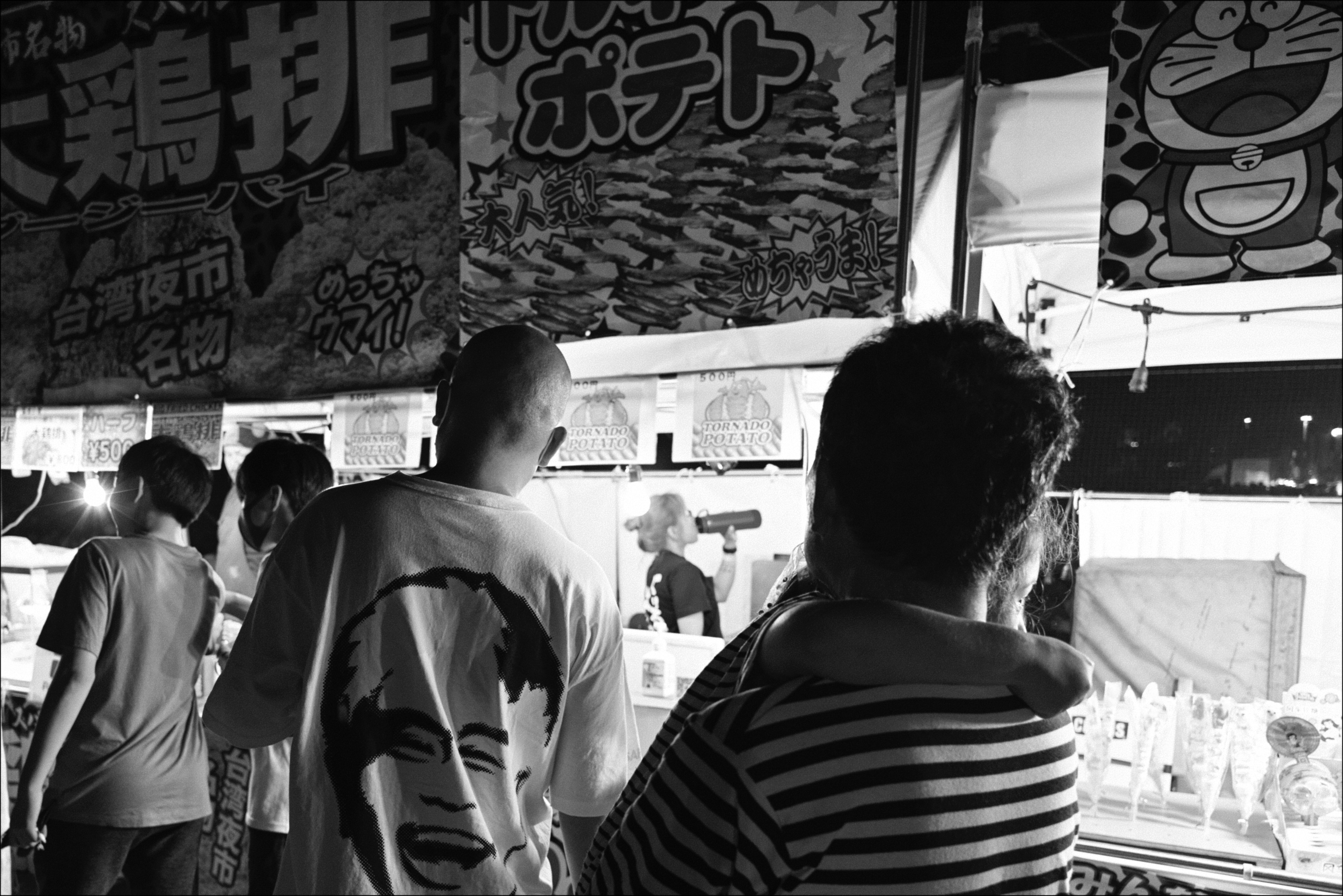
I wandered among the stalls, looking around with curiosity. There was no English, no Chinese, not a single white face—only Japanese in my ears. Young Japanese couples held hands while buying sweets; parents bought glowing toys to quiet their children’s cries; elderly people ate yakitori beside smoke-filled grills, food their children had queued for on their behalf. I threaded through the crowd with my camera and thought of 森山大道.
Moriyama Daidō often likens himself to a dog—a stray dog roaming the streets. He once said, “I used to photograph the streets the way a dog relieves itself everywhere along the road.” Thinking back on my own situation, if Moriyama was a dog, then I must have been a stray that couldn’t even understand the local language—an even sorrier creature.
After wandering for a while, defeated by the long yakitori lines and my dying phone battery, I returned to the grounds to look for a place to sit and prepare to photograph the fireworks.
Trying to find a patch of empty land for myself on a flat field carpeted with blankets and packed with people felt about as difficult as becoming self-sufficient in Shanghai and buying a single-room apartment downtown.
I circled the several-hundred-meter-long site for a long time before finally finding, at the very edge of the grounds, a small patch of bare earth where I could barely sit cross-legged. Just before my body touched the ground, I realized I hadn’t brought a blanket—and the earth was muddy from the morning rain. I jumped back up, tossed my backpack onto the ground, and sat down decisively. With no public trash cans on Japanese streets, the two plastic bottles inside my bag dug painfully into my backside, but at least I now had a stable position. I let myself sink into the darkness before the fireworks began, allowing my eyes to adjust.
Half a meter in front of me sat a family on a large blanket—from grandparents to grandchildren. Their numbers, the size of their blanket, and the intimate exchanges between generations all radiated comfort and abundance. Behind me to the right sat an old man with two tripods and two medium-format cameras—clearly a seasoned master.
I briefly considered moving closer to strike up a friendly conversation based on our shared love of photography. But when he noticed me lifting my camera without a tripod and stared at me as if I were an idiot, I immediately abandoned the idea.
The host’s announcements began. I closed my eyes and listened, pleasantly surprised at how much I could understand: thanking everyone for coming, mentioning a children’s choir performance, expressing gratitude to various companies for sponsoring the fireworks. This was all thanks to a Japanese class I had barely passed. One firework had even been sponsored to celebrate an elderly family member’s ninety-ninth birthday, drawing gasps of admiration from the crowd. Since my phone had died, I focused on the announcements, treating them as an impromptu listening exam.
Just as I opened my eyes wide, ready for the first firework, voices rose behind me—couples. Upon closer listening, damn it, there were two couples. They spread their blankets half a meter behind me, food and drinks in tow, and sat down. Already cramped into a corner, unable to stretch my limbs, I felt even more aggrieved.
At this point, alone / in a foreign land / unable to communicate / with my backside aching / and no blanket, I found myself encircled by a harmonious family, a well-equipped master photographer, and two couples. I suppose this too is a way of being “surrounded by happiness.” I stiffened my body, afraid of intruding into anyone else’s territory, and remained frozen there, soaking in the laughter and the smell of grilled meat, until the fireworks finally rose.
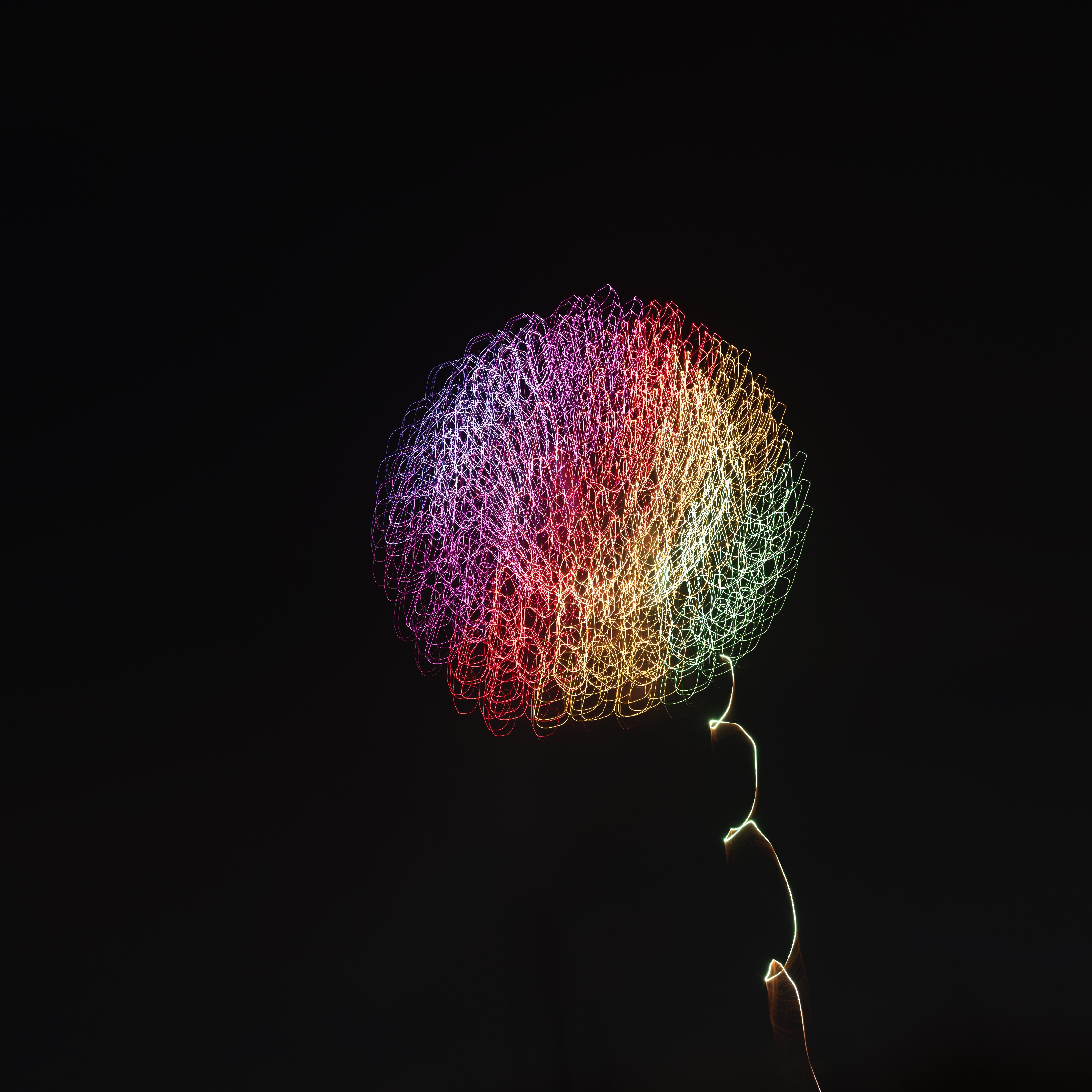
Perhaps because the festival was small, the fireworks display felt rather restrained. Each firework rose into the sky one by one, its name announced by the host as it bloomed. Even though the visual impact of these solitary bursts was thin, the elderly man in front of me let out a soft “oh~” of admiration every time one exploded. I raised my camera and photographed them one by one. Because it was so dark and I had no tripod, I was forced to use long exposures to capture their trails—an awkward imitation of 川内伦子’s Hanabi.